
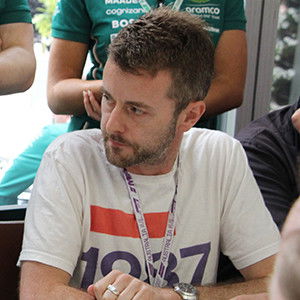

After 20 seasons, six constructors’ titles, eight drivers’ championships, and 124 grand prix wins, the longest-serving team boss on the Formula 1 grid is out — and the paddock is still coming to grips with it.
Horner’s sacking came just days after the British Grand Prix, blindsiding much of the team and the wider motorsport world.
In a short statement, Red Bull thanked him for “his exceptional work over the last 20 years” and noted he had been “instrumental in establishing Red Bull Racing as one of the most successful and attractive teams in Formula 1.”
That much is indisputable. But the manner of his exit has cast a shadow over one of the most successful tenures in the history of the sport.
Appointed at just 31 years old ahead of Red Bull’s debut season in 2005, Horner was the youngest team principal in Formula 1 history.
While many dismissed the new Milton Keynes outfit as a flashy soft drink marketing exercise, Horner quickly proved otherwise.
Buy tickets
In the early years, Horner oversaw the team’s steady rise, including the pivotal recruitment of renowned designer Adrian Newey from McLaren in 2006. That partnership delivered a breakthrough in 2009, as the Newey-designed RB5 turned Red Bull into a genuine frontrunner.
The team took its first victory in China with Sebastian Vettel, who, alongside Mark Webber, added five more wins as Red Bull finished second in the constructors’ standings. Just a year later, the team claimed its first constructors’ title — and Vettel became the youngest world champion in Formula 1 history.

Between 2010 and 2013, Red Bull reigned supreme. The team claimed four straight championship doubles, with Vettel and the team winning 13 of 19 races in 2013 alone. In total, Horner led Red Bull to 41 race wins during that four-year stretch, redefining the competitive order in the post-Schumacher era.
But success in Formula 1 is never linear. The arrival of the turbo-hybrid era in 2014 ushered in a Mercedes-dominated period that pushed Red Bull out of championship contention and into political battles over engine performance and regulation changes.
It was a testing time for Horner, who not only had to manage declining results but also mounting tension with engine partner Renault, eventually leading to a bitter split. Despite limited horsepower, Red Bull still managed to win races most seasons, largely thanks to aggressive car design and a strong driver program that was beginning to bear fruit.
Horner’s long-term vision arguably paid off in 2016, when the team boldly promoted teenage Max Verstappen from sister team Toro Rosso, a move that delivered immediate rewards. Verstappen won his very first race for Red Bull in Spain – thanks to Mercedes drivers Lewis Hamilton and Nico Rosberg colliding on the first lap – and over time, his rise became synonymous with the team’s resurgence.
After several years waiting in the wings, Red Bull returned to title contention in 2021, with Verstappen going toe-to-toe with Hamilton in one of the most controversial and dramatic seasons in F1 history.
Verstappen won the title in a highly disputed finish in Abu Dhabi — one that Horner staunchly defended — marking the beginning of another dominant stretch.
From 2022 through 2024, Red Bull and Verstappen were nearly unbeatable. Verstappen won a record-breaking 19 races in 2023 and at one point claimed a record 10 consecutive wins in a single season. Across those four years, Red Bull took 58 race victories, multiple records, and re-established itself as the team to beat.

The team’s success wasn’t limited to trophies. Under Horner’s leadership, Red Bull became a commercial powerhouse, grew its infrastructure and junior driver system, and expanded its footprint with a second team (Toro Rosso, later AlphaTauri and now Racing Bulls).
It also invested heavily in its own engine program, Red Bull Powertrains, for the upcoming 2026 regulation changes — a bold project Horner championed heavily.
But beneath the dominance, cracks had begun to appear.
Since Daniel Ricciardo left in 2018, Horner struggled to find a reliable number two at Red Bull. Pierre Gasly arrived from Toro Rosso but faltered, replaced by Alex Albon, who also failed to keep pace with Verstappen.
In 2021, Horner turned to Sergio Perez, a steady if unspectacular choice. Despite a 2025 contract, Perez was dropped in the off-season for Liam Lawson, who lasted just two races before Yuki Tsunoda stepped in, where the Japanese driver still struggles to match Verstappen’s pace.
Some reports in the wake of Horner’s axing cite his management of the Perez/Lawson/Tsunoda situation as one of the key reasons for his departure.
In early 2024, Horner faced an internal investigation over allegations of inappropriate behaviour with a Red Bull employee. Though cleared by Red Bull, the process created friction and exposed growing tensions, particularly with figures close to Verstappen.
Max’s father Jos Verstappen publicly warned the team was “at risk of being torn apart,” and Red Bull advisor Helmut Marko was also rumoured to be on shaky ground. Even as the team continued to win, speculation around power struggles and divisions intensified.
This year, Red Bull’s performance slipped. While still a front-running team with Verstappen’s brilliance, it lagged behind McLaren, Ferrari, and Mercedes, with just two wins in 2025 attributed more to Verstappen than the car. Rumours around Horner’s position escalated, and by the British Grand Prix, the dynamic at the top had shifted. Less than 72 hours later, Horner was gone.
No reason was given for his removal, not even to Horner himself. Speaking to Sky Sports, longtime friend and commentator Martin Brundle revealed Horner told him no explanation was offered. Several hours later, Horner posted a thank-you message on Instagram, and in a farewell speech leaked on social media, he said he had been informed of his removal only 12 hours earlier and remained employed by the company.
Horner leaves Red Bull with a towering legacy. Across 20 seasons, he oversaw 124 race wins, 107 pole positions, 100 fastest laps, and 287 podium finishes. His team claimed 14 sprint victories and notched 31 one-two finishes.
He managed 14 different drivers, including Vettel, Verstappen, Ricciardo, Webber, and Perez. Only Ron Dennis (138) has won more races as team boss, and only Frank Williams (44 years), Ken Tyrrell (31 years), and Dennis (30 years) spent longer as team principals in F1.
Horner’s future in the sport remains uncertain. At 51, he is younger than all but three current team principals and has shown no signs of stepping away from motorsport. As one of the paddock’s most experienced figures, interest is likely, with rumours already linking him to potential roles at Ferrari or Alpine, where he could continue his legacy.
With Horner gone, an era at Red Bull comes to a close. While the decision was sudden, his impact over two decades is undeniable.





















Discussion about this post